A gallery visit can feel like a test you didn't revise for. You walk in, there is a room of work, a wall of text you cannot read from the doorway, and a quiet suspicion that everyone else knows what they are looking at. Writing about it afterwards adds another layer of pressure.
An exhibition review is not an exam, though. It is a record of close attention, and it becomes far easier once you stop hunting for the "correct" response and start noticing what is actually in front of you.
Plan the visit, but do not over-prepare
Check the basics before you travel: opening days, closing times, whether the show is ticketed, whether any rooms are closed for installation. Galleries rotate works more often than most visitors expect, so a piece you have seen reproduced in a magazine may not be on display at all.
Read the organisation's press release once, then put it down. You need the artist's name, the dates, the broad shape of the show and the medium — not a script to parrot back. A reviewer who arrives with a finished opinion is easy to spot and dull to read.
What to take
If you can manage two visits, do. The first can be loose and curious; the second, on a quiet weekday morning if possible, can be slow and working. Take a pencil rather than a pen, since many venues ask for it near the work, and a small notebook that fits in a coat pocket. Check the photography rules before you start snapping, and be honest with yourself about whether photographing everything is helping you look or helping you avoid looking.
Look before you judge
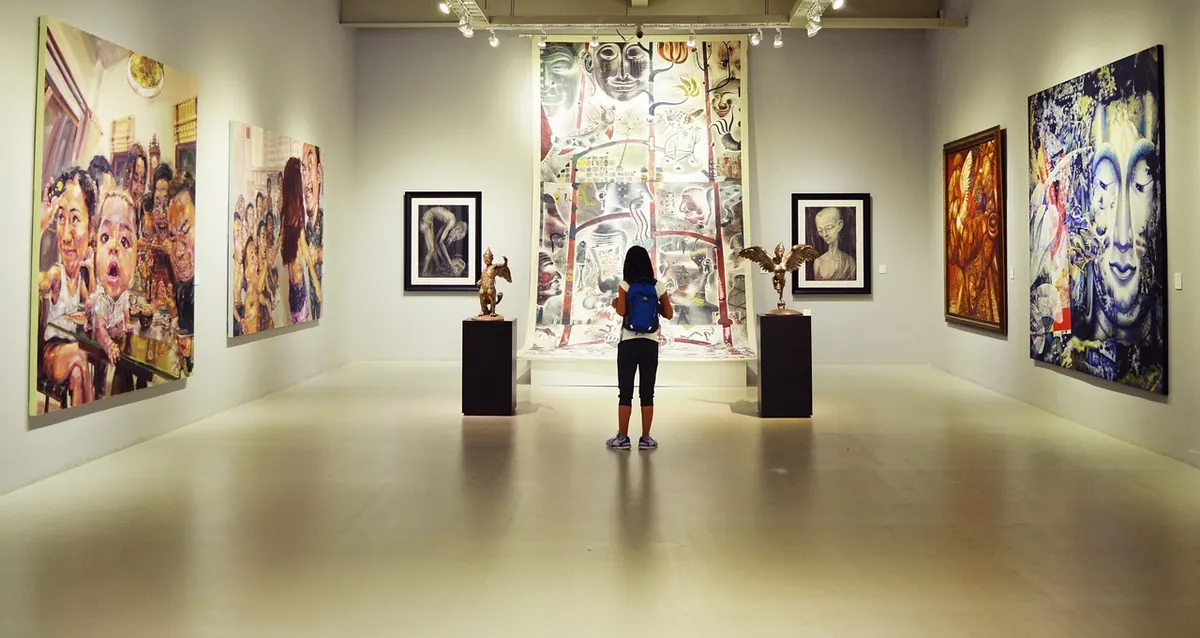
Start with a fast lap. Do not read a single label. Notice what pulls you across the room and what you hurry past. Notice where the air changes, where your feet slow, and whether you feel welcomed, lectured or simply baffled.
Then go round again properly. Give time to three or four works that hold you, and be suspicious of the ones you are admiring out of duty. The most useful note you can make is an honest one: resisted this, stood here for eleven minutes, wanted to leave after the third room. Emotion is evidence. So is boredom, provided you can say what produced it.
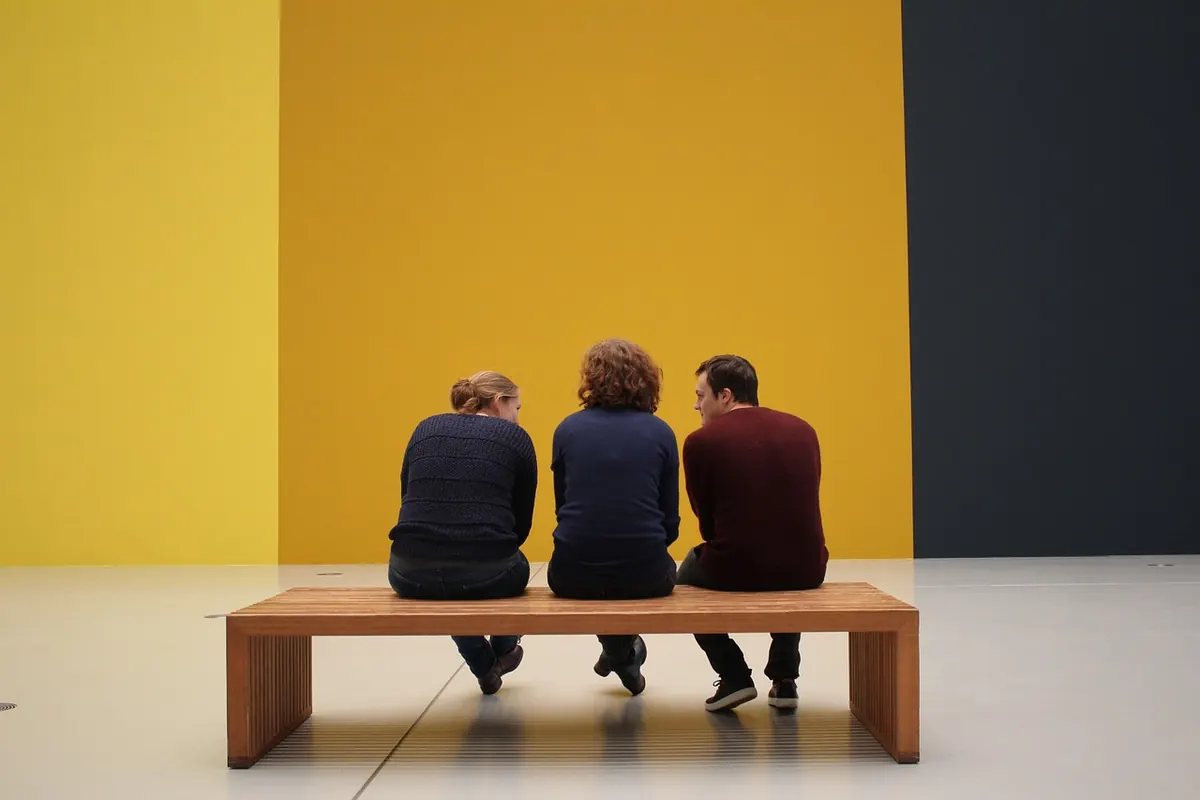
Sit down at least once. Galleries are tiring, and tiredness flattens judgement.
Take notes you can actually use
Good notes are concrete. Vague impressions dissolve on the journey between the gallery and the desk. Write down:
- the full title of a work as it appears on the label, plus the artist's name, the date and the materials, which are frequently more revealing than the image itself;
- one verb and one noun for each piece that matters to you — "poured", "scraped", "stitched", "lead", "calico";
- scale in relation to your own body: knee-height, door-height, wider than you can reach;
- the room number, and what hangs either side of the work;
- anything the wall text claims, especially if the work seems to disagree.
Add the physical facts of the building, too: the lighting, the traffic noise, the benches, the smell of fresh paint, the invigilator in the corner. Those details will make your review feel like a place rather than a list.
Describe the work without reaching for adjectives
Words such as vibrant, stunning and interesting tell the reader about your mood, not the work. Reach instead for verbs, materials and comparisons. Not "a striking abstract", but "a canvas so thickly loaded with oil that the surface casts its own shadows". Not "powerful sculpture", but "a bronze the size of a child, polished to a shine on the head and shoulders only".
You do not have to cover everything. A review that discusses two works closely and mentions the rest in passing will tell a reader far more than a paragraph of name-checks. Choose the pieces that carry your argument and let the others stay in the background.
Judge the curation, not just the art
Curation is the argument a show makes. It is visible in which works were chosen, in what order they are hung, in how much space each one is given, and in what the labels say. Ask yourself what the exhibition wants you to believe. Does the sequence build, or does it simply fill rooms? Does the lighting serve the surface of the work or flatten it? Does a fragile, quiet drawing get crushed between two enormous paintings?
Notice the gaps as well. Whose work is missing, which decades are skipped, which questions go unasked. Keep the two judgements separate, too: an artist can be poorly served by an exhibition, and an exhibition can be beautifully made around modest work.
Shape the review around one idea
Before you write, reduce your response to a single sentence. If you cannot, you probably have two reviews and should choose one.
Open with something specific — a room, a detail, a moment of confusion — rather than a potted history of the artist. Give the reader the essentials early: who, where, when, and how long the show runs. Then spend the body of the piece on evidence, describing particular works and what the hang does to them. Say where you disagree, and show your working when you do.
Use the first person sparingly; "I" earns its place when you are describing a real reaction, not when you are padding. Cut every adjective you can live without, read the piece aloud, and check that a reader who never visits will still understand what the show looked like.
Before you file: a quick checklist
- Names, dates, titles and materials checked against the label or catalogue.
- At least two works described in specific, physical detail.
- One clear judgement about the curation, with reasons.
- Any borrowed fact attributed, and nothing guessed.
- The opening line read again — does it earn the next one?
Finally, remember that a review is a piece of writing before it is a verdict. Take your time, trust your notes, and say what you actually saw.
Photo: StockSnap / Pixabay