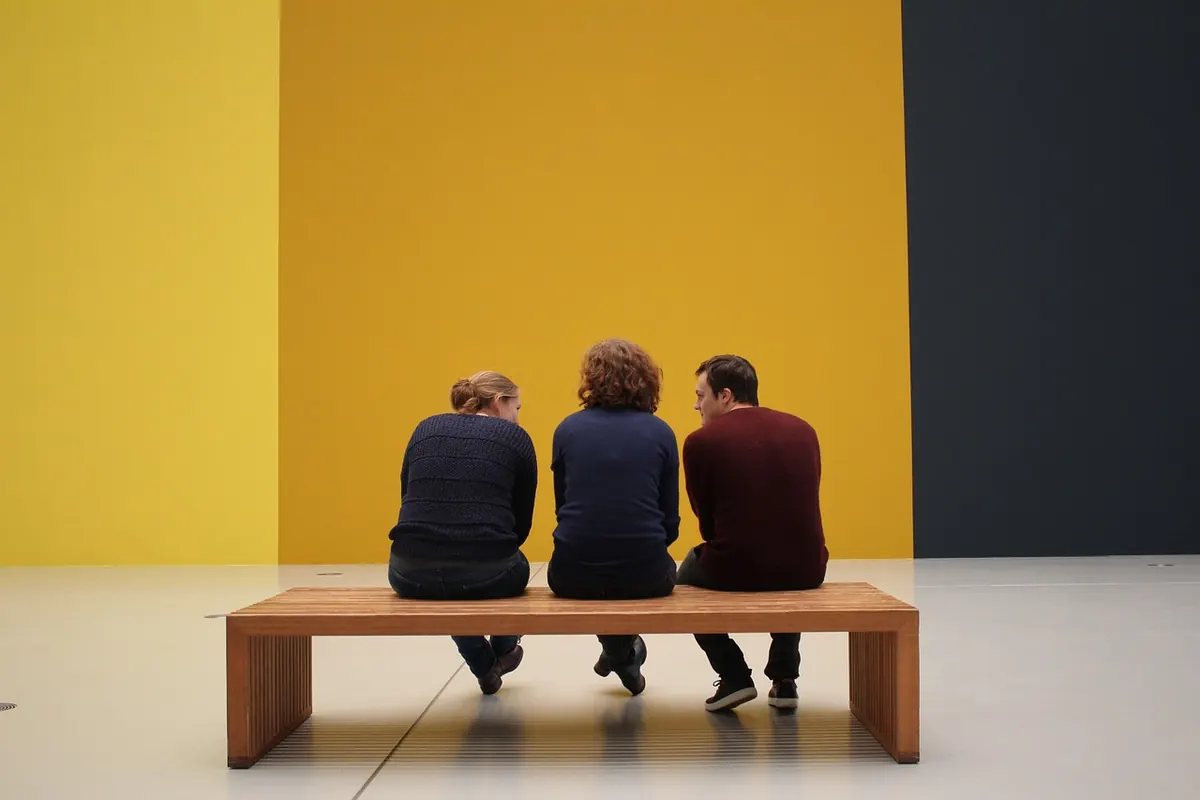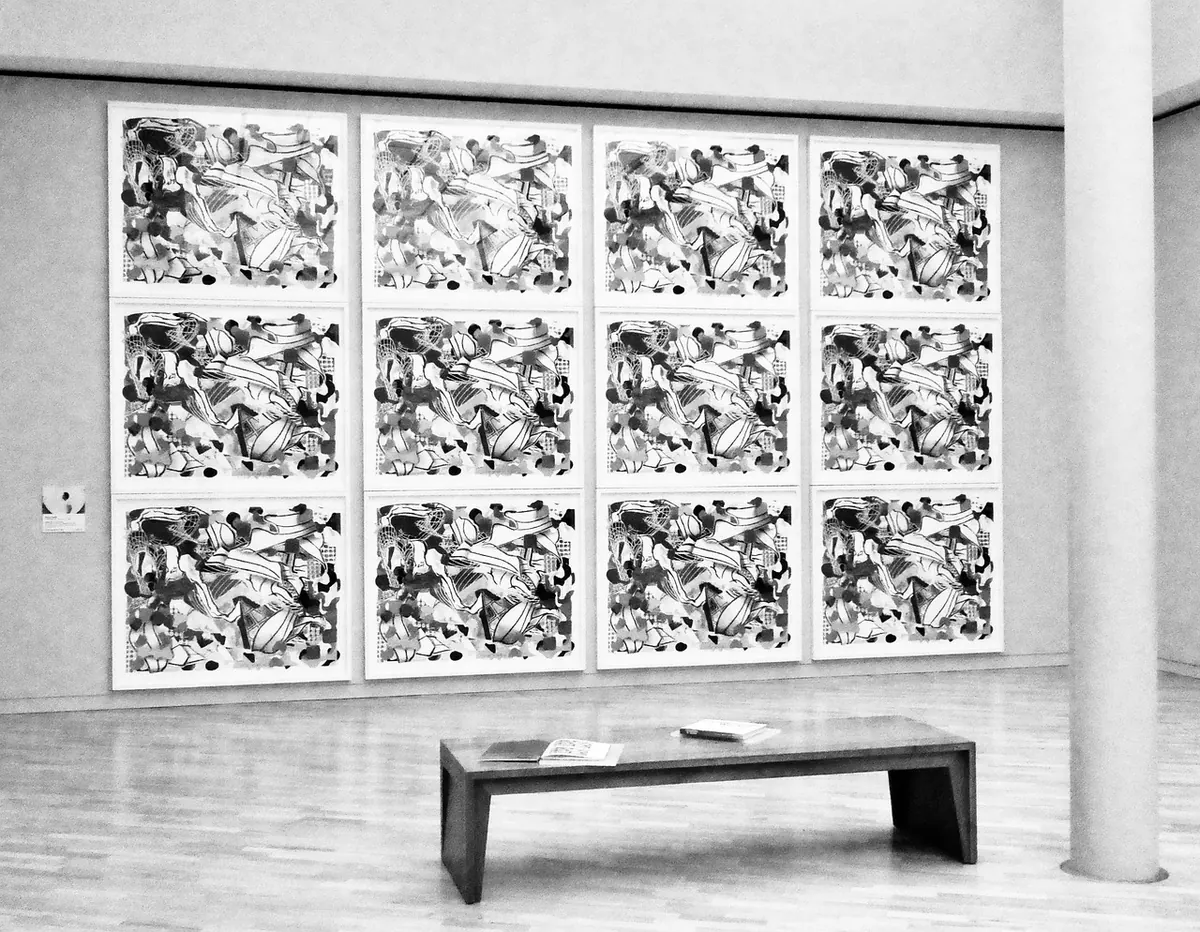
Two people stand in front of the same painting. One says she likes it. The other mentions that the light arrives from a single window, that the table tilts towards her, and that the sitter's hands are the brightest thing in the room. Both responses are honest. Only one of them is criticism.
Close reading is the name for that second kind of looking. It is slow, unglamorous and remarkably effective, and it is the technique that separates a review worth reading from a paragraph of opinion with a painting attached.
What Close Reading Means in Front of a Picture
The method comes from literary study, where critics of the early twentieth century argued that a poem should be examined as a made thing — its words, syntax, rhythm and structure — rather than reduced to the author's life or a vague theme. Art criticism borrowed the habit, and the principle transfers neatly. A painting is also a made thing. Its decisions are visible, and most of them were decisions.
Close reading is not formal analysis on its own, which can decline into a checklist: line, shape, colour, tick. Nor is it iconography, the hunt for symbols. It keeps description and meaning in the same conversation, and it insists that the meaning be earned from what is actually present.
Description earns the right to interpret. Skip it, and the interpretation floats free of the object.
Begin With the Bones: Composition and Format
Before you decide what a picture is about, work out how it is built. Composition is the load-bearing structure, and it is easier to see than to explain.
Ask where your eye lands first. Then follow it. Trace the route with a finger if nobody is watching: a diagonal, a repeated vertical, a pair of eyes, a bright patch against dark. Notice where the picture slows you down and where it lets you go. Notice what sits dead centre and what has been pushed to the edge — painters hide quiet, strange things at the edges, and finding them is half the pleasure of looking closely.
Format matters too. A tall rectangle does something different from a wide one. A square refuses to say whether it is a portrait or a landscape. Cropping decides what we are not allowed to see, and the space beyond the frame is part of the composition.
The Working Parts: What to Look For
Once you have the structure, examine the materials. These questions work on almost any image, from an oil sketch to a photograph to a screen-based work:
- Line. Is there a drawn line, and does it describe an edge or create one? Are contours crisp or dissolved?
- Tone. Where are the darkest and lightest passages? Is the contrast harsh or soft, and does the light come from a plausible source?
- Colour. Which colours dominate, which are used sparingly, and where do the warm and cool areas sit? Is the palette harmonious, jarring, or deliberately muddled?
- Surface. Can you see the mark of a hand, a brush, a chisel, a lens? Is the surface smooth and invisible, or does it advertise its own making?
- Space. Does the image open into depth or press flat against the plane? What convinces you, and what refuses to?
- Scale and repetition. What is unusually large or small? What shapes or gestures come back, and what changes when they return?
You are not obliged to answer all of these. Two or three observations, precisely made, will carry a review further than a full inventory.
A Sequence You Can Use on Any Picture
When you are in a gallery with five minutes and a notebook, a fixed order stops you drifting into taste and staying there.
- Look without speaking for a full minute. Resist the label.
- Describe the subject in one plain sentence. What is in front of you, literally?
- Describe the construction: format, composition, where the weight sits.
- Describe the handling: line, tone, colour, surface, space.
- Note your own reactions and where they came from. Boredom and irritation are evidence too.
- Only now bring in what you know: date, place, materials, genre, conventions.
- Test your reading against the object. Does the picture support it, or are you decorating it?
Context, Handled With Care
Context is not the enemy of close reading; it is the second half of it. Knowing when a work was made, what it was made for, what a gesture or an object meant to its first audience, and what conventions the artist was working within can transform a puzzling image into a legible one.
The trouble starts when context does the work that looking should have done. A biography is not a key that opens a picture. The fact that a painter was unhappy in 1897 does not explain a particular shade of grey, and treating it as though it does is a form of cheating. Use context to answer questions the object has raised, not to replace them. And be careful with facts: dates, attributions and the meanings of symbols are the parts of a review most likely to be wrong, so check them or leave them out.
Traps That Weaken a Reading
Over-reading
Not every chair is a symbol of mortality. If a detail can be explained by practical considerations — the shape of the room, the size of the canvas, the price of a pigment — try that explanation first.
Jargon as a shield
Words such as liminal and problematise can disguise an absence of observation. If you cannot say it in ordinary language, you may not have seen it yet.
Ignoring the boring bits
Frames, labels, damage, discoloured varnish, a bad hang, a reflection on the glass. These affect what we see, and a critic who notices them is usually a critic worth trusting.
One true reading
Good pictures support several readings. Your job is to make one of them convincing, not to close the case.
Practising Close Reading
Choose one image and give it ten minutes a day for a week. Write a paragraph each time without repeating yesterday's observations. By the fifth day you will be noticing things you walked past on the first.
Read your draft aloud and cut every adjective that is doing no work. Compare two works hung side by side and describe only what differs, which is the fastest way to learn what actually matters in a picture. Visit the same exhibition twice, ideally on a quiet morning, and see what survives the second look.
Then write it down in plain sentences, with the description first and the judgement after. That order is the whole method. It is not a rule about politeness or balance; it is a rule about accuracy, and accuracy is what makes a piece of criticism useful to somebody who has not yet stood in front of the thing itself.
Photo: MemoryCatcher / Pixabay