A Checklist for Reviewing Live Music Gigs
A live review gets written twice: once in the room, once at a desk the next morning. Almost everything that makes it worth reading comes from the first pass — the details that evaporate within an hour of the last chord. A singer hunched over the mic stand. A kick drum that arrived late all night. A chorus the band clearly hadn't expected two thousand people to know.
That is why a checklist helps. Not because a gig should be reduced to a scorecard, but because the pressure of a live room scrambles memory. The more deliberately you watch, the more you have to work with when the house lights come up and you have to explain what actually happened. The goal is not to be exhaustive. It is to notice enough that your review can be specific, fair, and alive on the page.
Before the Lights Go Down
Most of the useful preparation happens in the hour before the support act. You are not there to become an expert on the venue's ventilation system, but small details will shape the night. A room with a low ceiling will swallow certain frequencies. A crowd that has been queueing since noon will behave differently from one that drifted in from the pub next door. Note the conditions, then set them aside until they matter.
- Check the running order: Who is on first, how long each set is meant to last, and whether there is a curfew. A review that misidentifies the support act or ignores a shortened headline set is needlessly careless.
- Bring the right tools: A notebook, a phone with a notes app, a pen that works, and earplugs. Earplugs are not a sign of weakness; they are how you hear the mix instead of just feeling it.
- Leave your expectations at the door: If you have loved the album for a decade, say so to yourself, then listen to the gig in front of you. If you have never heard a note, do not pretend you have.
- Scan the room: Where is the sound desk? Are there pillars blocking sightlines? Is the floor half full or dangerously packed? Is the audience standing, seated, dancing, or waiting?
In the Room: What to Notice
The show itself is a moving target. You cannot write down everything, and you should not try. Instead, train your attention on a handful of categories. A few sharp observations in each will give you more than a page of vague adjectives.
Performance and Stagecraft
Watch the bodies, not just the songs. How does the singer hold the microphone when they are nervous? Does the guitarist turn toward the drummer during a solo, or away from the crowd? When a song ends, who looks at whom first? These small signals tell you whether the band is locked in, fraying, or merely going through the motions.
- Dynamics: Does the band play every song at the same volume and intensity, or do they create peaks and valleys? A quiet number that hushes a rowdy room can be more powerful than a wall of noise.
- Mistakes and recoveries: A missed cue is not automatically a flaw. How the band handles it — with a laugh, a glare, a shrug, a sprint back into the groove — is often more revealing.
- Between-song talk: Is the banter rehearsed, awkward, generous, or nonexistent? A mumbled "this is a new one" can say more about a gig's mood than a polished speech.
- Instrument changes and guests: Note when a band swaps instruments, brings out a horn section, or invites a support act back onstage. These choices affect pacing and atmosphere.
Sound, Mix, and Room
The mix is not a neutral backdrop. It is an interpretation. A vocal buried under guitars can make a confessional song feel distant. A booming kick drum can turn a delicate ballad into a mudslide. Listen for clarity, balance, and whether the sound improves or degrades as the set goes on.
- Vocals: Can you understand the words? Does the singer sound strained, confident, or drowned out? If they step away from the mic and the room still hears them, that is worth noting.
- Rhythm section: Is the bass felt as well as heard? Does the drums' timing sit comfortably with the rest of the band? A kick drum that arrives late all night becomes a character in the review.
- Venue acoustics: Is there an echo, a dead spot, a ringing frequency? Did the sound engineer fix a problem by the third song, or did it persist? Mention the room only when it changes what the audience experiences.
- Volume: Loud is not the same as intense. Note when volume serves the music and when it simply flattens it.
The Crowd as a Character
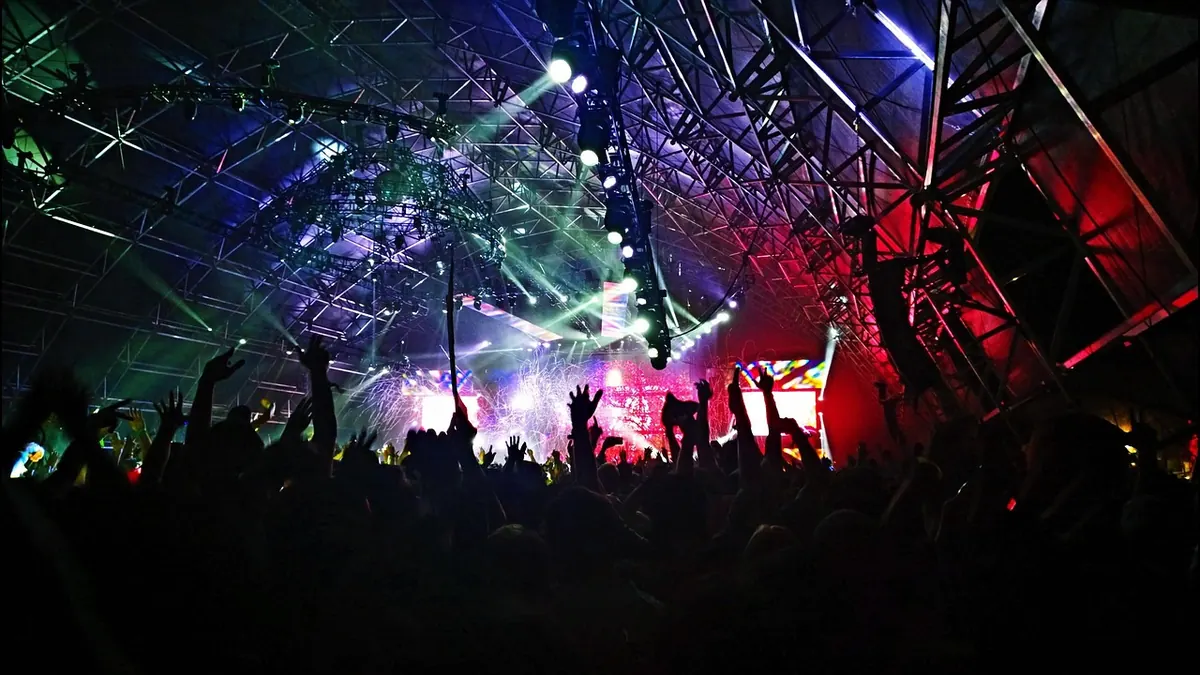
A live review is not just about the stage. The audience is a living, breathing part of the performance. They can lift a mediocre set into something memorable, or stand still and turn a great band into background music. Watch how the crowd responds, but avoid treating them as a single blob. Look for the front row, the bar queue, the pockets of dancers, the person who knows every word.
- Singalongs: Which lines does the room shout back? Which songs get a phone-lit sway? Which new songs send people to the bar?
- Movement: Is there a pit, a mosh, a gentle two-step, or total stillness? Does the crowd surge forward or drift back?
- Age and mix: Are there teenagers at the barrier and grandparents at the back? Does the band acknowledge the range of people in the room?
- Attention: Are people watching, filming, talking, or leaving? A mass exodus during the encore is a detail no review should ignore.
Setlist and Pacing
The setlist is the architecture of the night. A good set does not just stack hits; it creates a journey. A bad set can make great songs feel like a playlist on shuffle. Keep a rough note of the order, or ask for a copy afterward if one is available, but also trust your sense of how the night felt.
- The opener: Does the band start with a statement, a slow burn, or a nervous stumble? How quickly do they win the room?
- The middle: Is there a lull? Are new songs placed where they can breathe, or dropped in like an obligation? Does a cover earn its place
Photo: Pexels / Pixabay